


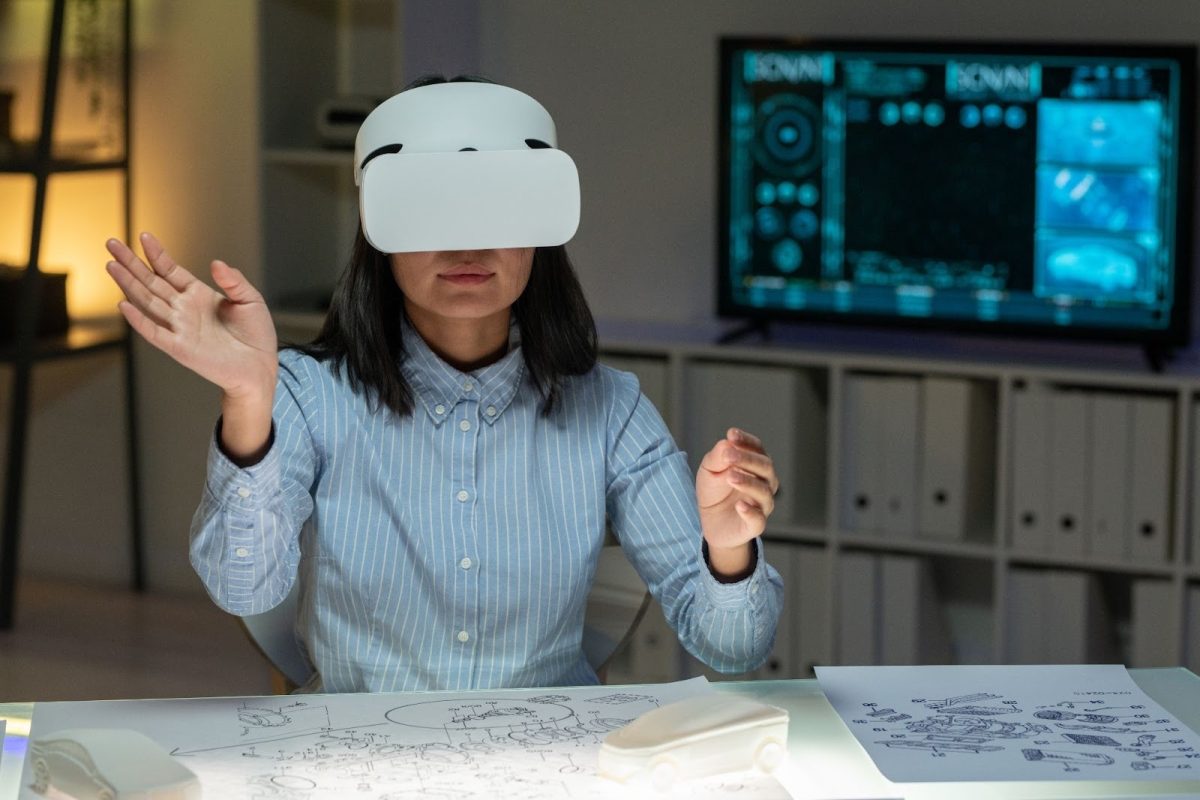
Augmented Reality (AR) and Virtual Reality (VR) are path-breaking technologies reshaping industries, with investments touching billions. Being at the forefront of technological innovation, AR and VR applications are far-reaching, ranging from healthcare to gaming to real estate to education. Because of these technologies gaining momentum, the demand for skilled AR/VR developers is rising considerably. At Aquil Tech Labs, our AR/VR development experts can create applications to blend physical with virtual elements for immersive storytelling experiences, revolutionizing the way users interact with brands.
This guide explains the basics of AR and VR development, covering the latest trends and key concepts in this dynamic field.
Decoding The Basics of AR and VR Concepts
Let’s first learn more about AR and VR technologies:
- Augmented Reality (AR): AR enhances real-life experiences by overlaying digital information onto the physical world. It creates virtual interactive experiences by adding sounds and graphics to the real-life environment. SnapChat filters, Pokémon GO, and AR Navigation capabilities are examples of AR technologies.
- Virtual Reality (VR): VR immerses users in a simulated digital environment via VR headsets such as Apple Vision Pro and Meta Quest. Some of these headsets contain controllers for interaction and motion-tracking devices, enabling users to interact with virtual objects. PlayStation VR, HTC Vive, and Oculus Rift are among the popular VR platforms.
- Mixed Reality: This new phenomenon combines AR and VR concepts to allow users to interact with digital assets in real time.
AR/VR development is all about creating training modules, applications, and enterprise solutions via platforms such as WebXR, Unreal Engine, and Unity. These advanced technologies are increasingly being used in the entertainment industry, gaming applications, healthcare, training simulations, and virtual tours.
Guide To Becoming an AR/VR Developer
- Work on core platforms: Unreal Engine (C++/Blueprints) and Unity (C#) are good examples.
- Learn the basics of 3D Modeling: Maya and Blender are among tools deployed to create immersive assets.
- Practice on Augmented Reality Software Development Kits (AR SDKs): These include Microsoft’s Mixed Reality Toolkit, ARCore (Google), and ARKit (Apple).
- Study the Latest Trends: Connect with developer forums, keep abreast of the latest XR trends, and experiment with AR glasses.
Nowadays, developers with cross-platform XR skills, which means those with AR and VR expertise, are increasingly being sought after by companies.
Understanding the Correlation between Artificial Intelligence and AR/VR Applications
- AR/VR Development does not constitute a part of AI.
- AR/VR experiences are about extended reality, while AI is a field of computer science that enables machines to perform routine, automated tasks.
- Nonetheless, AI models can boost AR/VR interfaces via adaptive environments, natural language applications, and object recognition, which include AI-based images in VR meetings.
- The integration of AI models into AR/VR applications can create custom-made learning environments and smart immersive assistants.
Related Reads: The Complete Framework to Selecting the Best Digital Marketing Agency in 2025
AR/VR Interfaces: Latest Trends/Changing Landscapes
In 2025, the key trends in AR/VR development are:
- AI & Machine Learning Integration: AI has made it possible to personalize experiences via AR/VR technologies. AI models are now also equipped to predict user behavior in VR training.
- Mixed Reality (MR): MR blends AR and VR to allow users to interact with physical assets and digital objects simultaneously. Manufacturing and design industries are early adopters of this advanced technology.
- Cloud Computing: By moving to cloud technology, heavy AR/VR applications are eliminating the need for local hardware. The low-latency feature of edge computing is key for immersive experiences.
- Sensory Tech: Simulating touch & texture and tactile sensations are part of new features in the latest devices. They have demand in training modules, medical environments, and the gaming industry.
- Lightweight Wearables: AR glasses and VR headsets, with their advanced features, are becoming more comfortable and practical for daily use.
The AR/VR market is evolving, with developers focusing on making AR/VR interfaces compatible for disabled persons. It is expected to touch $520 billion by 2031, recording a significant jump from $30 billion by 2022
AR/VR Applications in Different Industries
- In the healthcare field, AR is being used increasingly for patient diagnostics and VR has uses in surgery training.
- Virtual labs and immersive classrooms are becoming part of the education industry.
- The retail industry has introduced virtual product trials and AR shopping experiences.
- The entertainment domain is embracing virtual concerts and realistic gaming.
Final Thoughts
The year 2025 is a good time to expand your knowledge about AR/VR development. Many industries are embracing immersive technologies, driving the demand for AR/VR developers. Learning about AI integration, 3D design, and coding paves the way to a promising career in this domain.
AR/VR offers opportunities to both aspiring developers and business leaders. At Aquil Tech Labs, our AR/VR experts are equipped to create immersive experiences to drive growth.
Contact us today to know more about how AR/VR can transform your brand via customized solutions aligning with your goals!
Frequently Asked Questions
AR/VR development involves combining digital content with physical environments to create immersive experiences.
Learn C# and C++ programming languages, work on platforms such as Unity and Unreal Engine, and practice with ARCore SDKs/ARKit.
AR development requires knowledge of coding, physics, and 3D graphics, which makes it moderately challenging. More so, hardware constraints pose a challenge to developers when they have to create apps to improve the digital experience. However, AR apps are becoming easier to deploy with edge computing and cloud rendering.
Among the newest AR/VR trends are AI-oriented immersive assistants, lightweight headsets, enterprise learning simulations, and spatial audio.
Yes, developers can use JavaScript and WebXR frameworks to create internet-based immersive experiences.