


CRM vs Erp Solutions: Trends, Types, and Integration
Business processes have all become about streamlining operations. Customer Relationship Management (CRM) and Enterprise Resource Planning (ERP) are the two main types of software systems that most companies are deploying to automate routine tasks nowadays. However, the functionality of both these software solutions overlaps in many ways, although they focus on different aspects. Sales, service, and marketing fall under the CRM domain, while human resources, finance, supply chain are among internal operations classified under ERP services.
Are you looking to integrate CRM and ERP systems into your business operations? At Aquil Tech Labs, our experts come with varied years of experience in developing customized CRM and ERP solutions, automating workflows between departments for greater efficiency and productivity.
In this guide, we explore the different aspects of CRM and ERP development, including their different types and which you should choose to manage your business operations.
CRM Software: Customer Relations Get Prominence
A Customer Relationship Management System (CRM system) is equipped to store and manage customer data in the company. From automating support systems to maintaining relationships with existing customers to processing invoices to generating leads, CRM software unifies customer-related processes. HubSpot, Zoho CRM, and Salesforce are some examples of CRM software solutions.
ERP Solutions: Focuses on Increasing Efficiency
ERP solutions manage the backend processes seamlessly, involving the integration of data and processes. Accounting, purchasing, warehousing, and manufacturing are included in this lot. By improving coordination among the different processes, ERP software helps to lower costs and boost profits. Oracle, SAP, and Microsoft Dynamics are counted under ERP systems.
Detailing the 4 Types of CRM Solutions
Among the four main types of CRM software are:
- Operational CRM focuses on automating a range of customer service processes, including sales, marketing, and lead management. It streamlines workflows by managing the “front-end” customer relations.
- Analytical CRM assesses customer data to study their buying patterns and preferences. It uses segmentation, reporting, and data mining to help businesses understand customer behavior.
- Collaborative CRM improves communication across the different departments of a company. By integrating user data from various teams (such as support, sales, and marketing), it enriches the customer experience. Feedback tracking, channel management, and shared customer databases come under collaborative CRM.
- Strategic CRM adopts a long-term approach to retain customers. It uses data from other CRM types to build relationships with customers. Loyalty programs, Customer lifetime value (CLV) tracking, and strategic segmentation are among features of this CRM software.
Related Reads: Master E-Commerce SEO in 2025: Optimize for Google and AI Systems to Stay In the Race
Listing the 3 Main Types of ERP
The three main types of ERP software are:
- On-premises ERP software is installed on company servers with on-site customization services, which provide companies with full control over their data. It is best suited for large organizations to ensure compliance. Oracle E-Business Suite and SAP ECC are types of ERP software.
- Cloud-based ERP systems are recommended for businesses of all sizes. This software is hosted on the vendor’s servers, providing internet access to subscribers. Vendors can handle support and maintenance functions online. It offers flexibility to small-sized and medium-sized businesses while saving their business-related costs. WorkDay, NetSuite, and Microsoft Dynamics 365 are examples of ERP software solutions.
- Hybrid ERP solutions integrate on-premises ERP systems and cloud-based ERP solutions, enabling companies to manage local operations and cloud computing services for other business functions. Microsoft Dynamics 365 Hybrid and Infor CloudSuite come under Hybrid ERP solutions.
Decoding the Synergy Between ERP and CRM
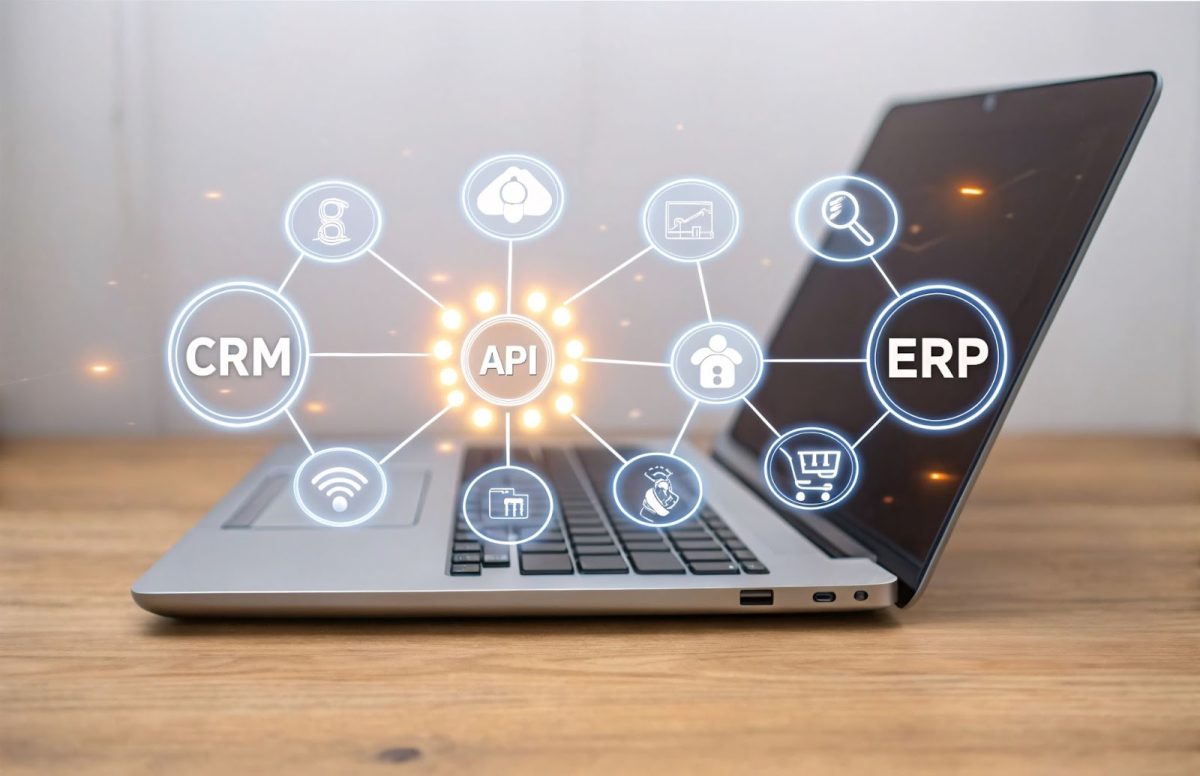
Businesses can use an application-integrated method to integrate CRM and ERP applications, whereby data is shared to create a unified framework. The CRM can manage the front-end customer interactions, whereas ERP can handle the back-end business operations. You can then have detailed customer data after an order is placed, including supply chain management tools, shipping details, order history, and financial data.
This seamless integration of ERP and CRM software systems ensures timely data exchanges, improving overall efficiency and productivity.
Choosing Between CRM and ERP
Both CRM and ERP serve different functions while complementing each other. Consider your business’s needs and priorities when choosing between them.
ERP software helps to automate back-office functions, such as supply chain, human resources, and finance. Process-heavy businesses can streamline their internal processes with ERP solutions, improving business efficiency.
CRM solutions help to improve front-end operations such as customer service, sales, and marketing. Choose CRM if you are a sales-driven company seeking to improve customer relations.
The best strategy is to integrate both ERP and CRM for a comprehensive solution. That’s because ERP handles the company’s databases and CRM focuses on improving customer communication.
CRM and ERP development: Latest Technologies
The technological innovations in CRM and ERP development are listed below:
Among the modern CRM technologies are Chatbots & Virtual Assistants, Social CRM, AI-Powered CRMs, Blockchain, Hyper-Personalization, and Omnichannel Customer Experience.
The technological advancements in ERP software systems are AI-driven automation, Mobile ERP Apps, IoT Integration, Cloud-Native ERP, No-Code Platforms, and AI & Predictive Analysis.
Finally
Businesses can gain an edge by leveraging CRM solutions and ERP software. On one hand, CRM software systems can cultivate and nurture business relationships. On the other hand, ERP solutions streamline and automate routine tasks. At Aquil Tech Labs, our professionals specialize in CRM and ERP development, ensuring smarter decisions and enabling businesses to grow speedily.
Book an appointment with our experts for any of your CRM-ERP integration needs to take your business many notches above!
Frequently Asked Questions
ERP software makes it possible to integrate core business systems into a single platform. It collects and centralizes data from the HR, sales, and marketing departments, thereby improving collaboration among them for greater productivity and enhanced decision-making.
CRM in software development is all about using tools to help businesses access customer data seamlessly. CRM systems can manage communication, record sales, and maintain customer records, helping businesses to understand customer behavior.
It takes between one and six months to integrate CRM and ERP software. It all depends on data volume and the complexity of business operations.
The size and nature of the business are important considerations when deciding to integrate CRM and ERP. Normally, CRM-ERP integration can benefit businesses with complex sales processes and a large customer base, allowing them to streamline their operations.
Among the various ways of integrating CRM and ERP are middleware/integration software, built-in connectors, custom-made solutions, and Application Programming Interfaces (APIs).